The limits to growth, sustainable development, and the green economy
Why capitalism cannot be ecological and turns crisis into profit.
by Paola Imperatore

It was 1972 when the famous MIT (Massachusetts Institute of Technology) report commissioned by the Club of Rome, entitled The Limits to Growth, was published. For the first time, it clearly highlighted the impossibility of pursuing infinite growth on a planet with finite resources. Faced with the rise of a mass ecological consciousness that increasingly pointed to the intrinsically anti-ecological nature of capitalism, economic and political elites attempted to present themselves as the solution to the very problem they had created. As environmentalist and chemist Giorgio Nebbia wrote, they argued that, while it was true that “unfortunately pollution and environmentally harmful accidents had occurred, no one possessed the knowledge and capital to develop clean technologies and goods better than businesses themselves.”
The core idea was that—by recalibrating certain mechanisms—economic growth could not only be compatible with environmental protection, but could even become a key instrument for it. By adopting market-based mechanisms, that is, by internalizing negative environmental externalities (such as waste and pollution) into production costs (for example, including in the price of a plastic bottle the cost of pollution linked to its disposal as waste), companies would be incentivized to improve their environmental performance.
These mechanisms were meant to make it possible to continue growing the economy, but in a sustainable way. From this intuition emerged the concept of sustainable development, coined in 1987 by the United Nations World Commission on Environment and Development, also known as the Brundtland Commission. However, what these market mechanisms actually produced was not environmental improvement, but the transformation of externalities—namely, production waste—into commodities. Waste, once considered a limit, could become a resource to be exploited for producing new energy. For instance, marble dust generated by quarry cutting, previously an environmental risk factor, could be repurposed as a material for cement or toothpaste; even CO₂ could be turned into a commodity. Indeed, it was precisely on this basis that the Kyoto Protocol was established, identifying carbon trading—the buying and selling of CO₂ emission allowances—as the mechanism to govern the climate crisis and achieve emission reduction targets.
In essence, within the framework of sustainable development—or what we might also call the green economy or green capitalism—the environment ceases to be conceived as a limit and instead becomes an opportunity for growth. The failure of this approach is demonstrated by reports, scientific studies, and records broken year after year. But to understand it, there is no need to leaf through pages of data: today, this failure is plain for all to see.
Why Growth Cannot Be Sustainable
The capitalist market has failed in its attempt to implement sustainable growth, revealing the socio-environmental violence hidden behind the mask of green growth.
Yet it has not failed because something went wrong; on the contrary, it failed precisely because everything worked according to its own logic—a logic that has been intrinsically anti-ecological and antisocial since its origins.
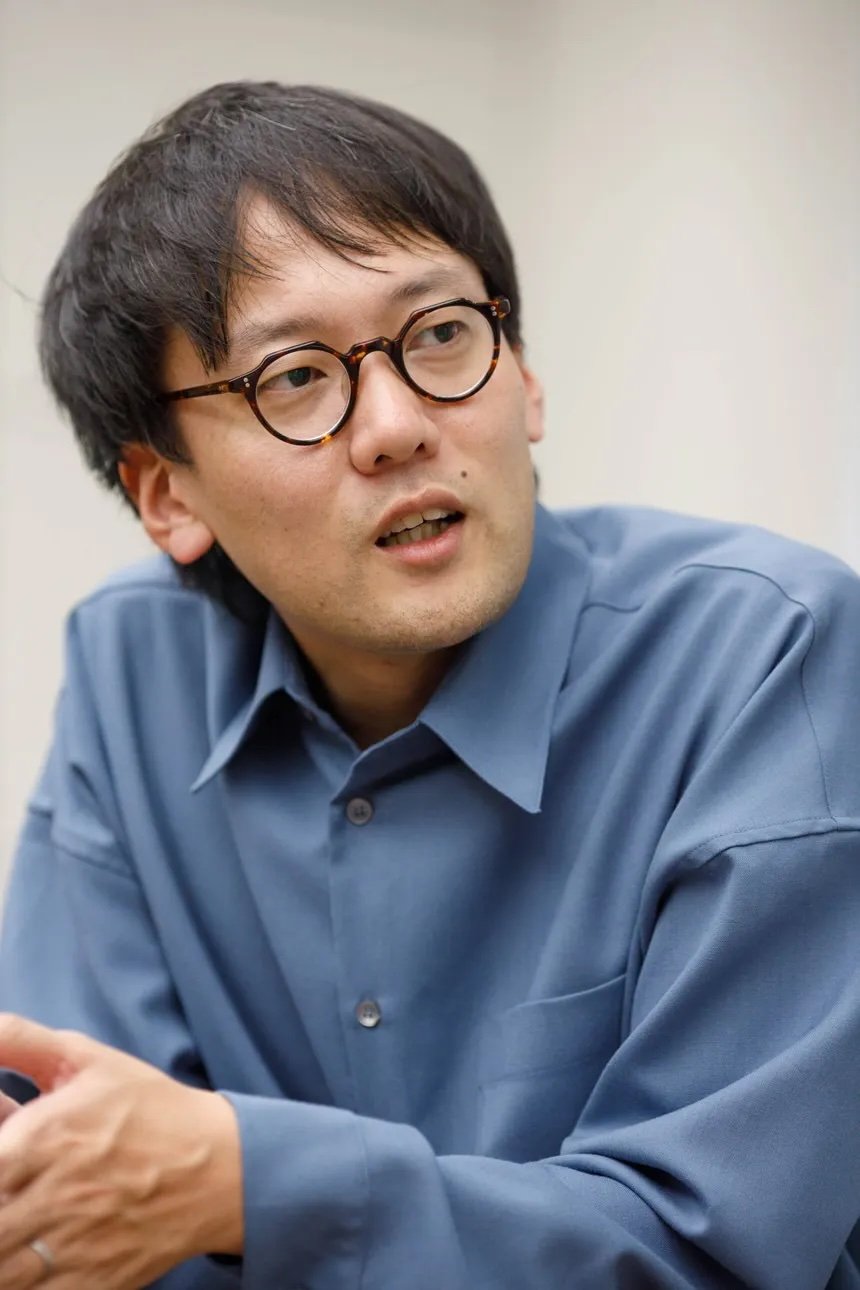
As Kohei Saito points out in Capital in the Anthropocene, capitalism cannot resolve its ecological contradictions without sacrificing profit. In the documentary The Cost of Growth, economic anthropologist Jason Hickel explains this paradox: “Capitalism is historically unique in one fundamental respect: it depends on constant growth to remain stable. Imagine being on an airplane that can only stay in the air as long as it keeps accelerating. The moment it starts to decelerate, it crashes.”
For this reason, capital adopts strategies to shift its contradictions and displace natural limits in order to secure continuous margins of accumulation and expansion.
These include temporal displacement, which burdens future generations—as climate movements have repeatedly denounced; spatial displacement, which consists in externalizing environmental costs onto the Global South and, more broadly, onto peripheral regions through a form of “ecological imperialism” that does not solve the problem but merely removes it from the Western field of vision; and technological displacement, based on the illusion of “decoupling,” that is, separating economic growth from increasing environmental degradation through technological innovation.
Extractivism, the Green New Deal, and New Frontiers of Capital
In the top-down ecological transition—discussed with Emanuele Leonardi in the book L’era della giustizia climatica. Prospettive politiche per una transizione ecologica dal basso (The Age of Climate Justice: Political Perspectives for a Bottom-Up Ecological Transition) —these contradictions quickly came to the surface. Where processes of reconversion grounded in social justice had been imagined, capital was instead designing new trajectories of accumulation. This was confirmed by Ursula von der Leyen, President of the European Commission, when she defined the Green New Deal as “our new growth strategy,” underscoring the centrality of capitalist development in the transition toward climate neutrality. The European Council likewise described the transition as an “opportunity for economic growth and for new business models and markets”.
This opportunity translated into the opening of mines for critical raw materials, into mega renewable energy parks aimed not at transition but at energy addition, into offshoring and mass layoffs—just some of the strategies through which markets have attempted to address the ecological question by trying to reconcile climate objectives with economic growth, shifting and expanding the frontiers of extractivism without solving the problem in any way.
Yet this cycle of accumulation has proved insufficient for the West, which has been challenged on its own terrain by other actors such as China—capable of integrating into liberal market dynamics and, for the first time, shaping the rules and conditions of this supposed meeting between supply and demand. This is also why the ecological transition exited the stage as quickly as it entered, making room for a far more profitable market: war.
From the Ecological Transition to the War Economy
According to researcher William I. Robinson, author of the 2019 article “Accumulation Crisis and Global Police State” published in Critical Sociology, once other forms of accumulation are exhausted, what remains is accumulation through militarization—militarized accumulation.
War has opened a new cycle of accumulation for capital,
moving vast public resources into the sector and shifting the discourse on ecological transition into the language of energy security, which has justified the resurgence of fossil fuels. It has even gone so far as to identify in the genocide of the Palestinian people an unprecedented economic opportunity in the reconstruction of the Gaza Strip, whose renderings have already appeared—grim and tragic—on our screens.
This interweaving of processes lies at the heart of the documentary The Cost of Growth, which starts from a question as simple as it is capable of dismantling the myth of growth as a societal necessity: for whom are we growing this economy? The film exposes the contradictions of the top-down ecological transition by following the journey of two activists, reflecting on what they believed about the “large structures and political institutions of our world [created] to protect peace and democracy,” and on “what they really are.”
Beyond Growth: Rethinking the Economy Outside Capitalism
Faced with this awareness, we must not surrender to catastrophe, but return to believing in society and in the strength of communities to collectively build a just, ecological, and democratic alternative. To do so, we need ideas, social relationships, grassroots power, small and large examples. We need hope.
“Hope and solidarity are active words. They are things that must be practiced—hope has to be created. Otherwise, we will all remain seated, waiting. No one can act in our place; we must do it ourselves”.
These are the words of Greta Thunberg in the documentary. Free from any determinism that draws easy links between an unfolding catastrophe and the emergence of a new world—but also beyond forms of pessimism that paralyze and annihilate us—we can imagine that the limits to growth might this time become an opportunity for society, rather than for markets, to reclaim its place and finally decide what kind of economy we truly need—and to act accordingly.
Leggi anche