Turin after the eviction of the Askatasuna social center
Security, politics, and gentrification.
by Marco Patruno
Synecdoche is one of the most well-known and widely used figures of speech in writing. One of its most common uses involves using a word to indicate a broader meaning, a part for the whole. In some cases, our reasoning cannot grasp the entire horizon ahead of us. Too much information, too many contexts to decipher, too many versions of too many different facts. To preserve our mental energy, we decide to neglect some things and give importance to others. Then there are very special cases, points where events, characters, and meanings converge and accumulate, allowing us, even if only for a moment, to understand vast dynamics in a profound, crystal-clear way. That part that explains everything.
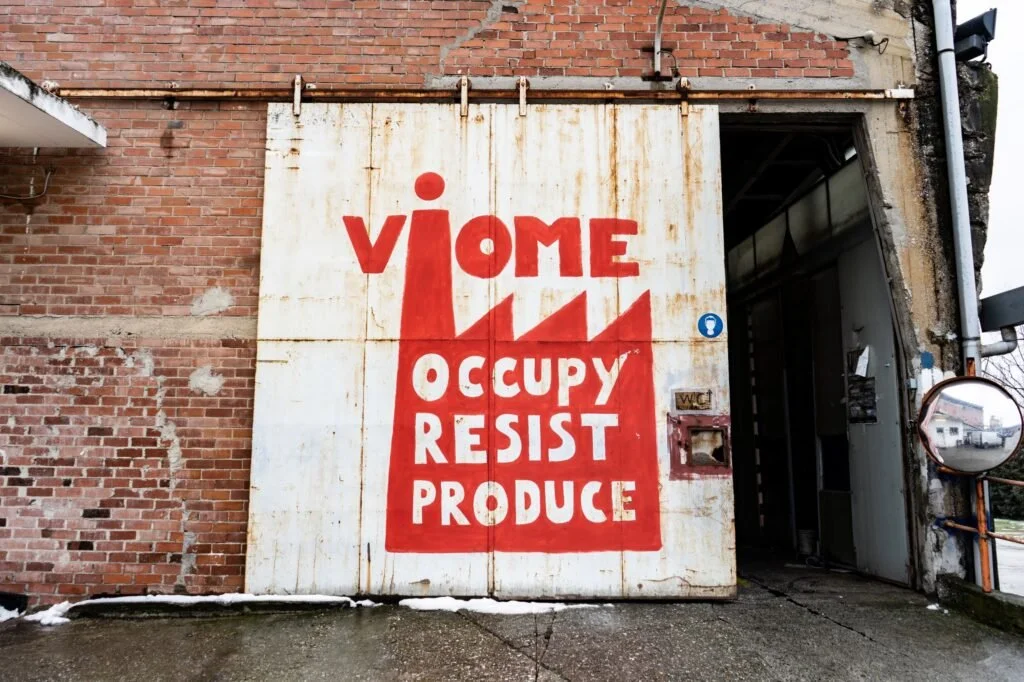
In the events of recent months, this part is a neighborhood in a city in northwestern Italy. The Vanchiglia neighborhood, located in the eastern quadrant of Turin. Vanchiglia is triangular in shape. The River Po closes it off to the east, while Corso San Maurizio and Corso Regina Margherita delimit it on the remaining sides, meeting at Rondò Rivella, the apex of this imaginary triangle. The Askatasuna space is located at number 47 on Corso Regina Margherita.
Askatasuna and Vanchiglia: chronicle and significance of the eviction
A social center occupied in 1996, it has always been divisive. In the escalation of its opponents' now unrestrained rhetoric, it is portrayed as a hideout for terrorists who want to attack the state. For others, it is a place to take their children to play in its garden. In fact, Askatasuna is at the center of an educational hub in the neighborhood, where there are schools of virtually every grade. Or rather, it was.
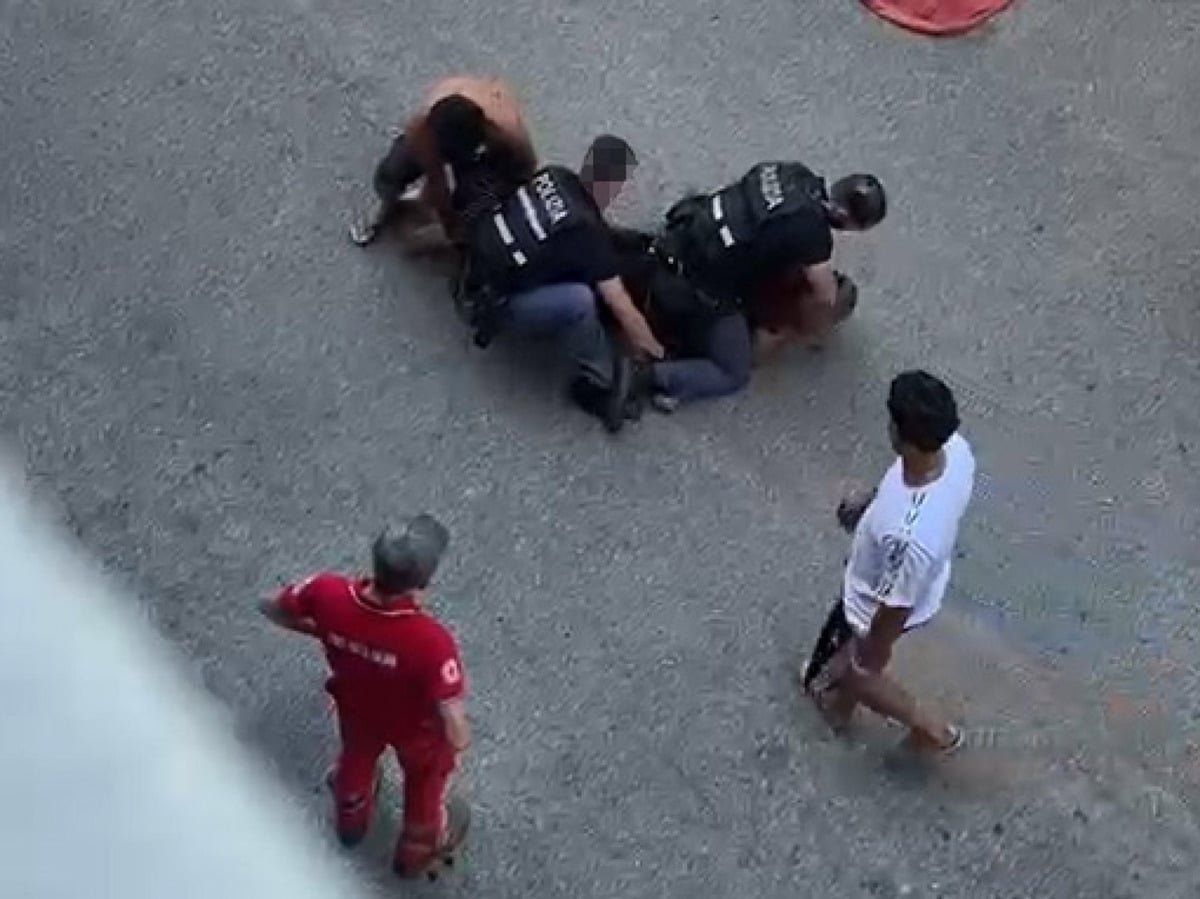
Because on December 18, 2025, the social center was evicted. Not just any date. In fact, on December 18, 103 years earlier, in 1922, what has gone down in history as “The Turin Massacre” began. Two days of fascist attacks on workers' clubs and the city workers' union site which claimed the lives of 11 anti-fascist militants.
At the time of the eviction, Askatasuna, or Aska, was in the middle of a legalization process that would have made it a public space available to the city. It was a troubled process, managed by a group of intermediaries who acted as a buffer between the occupied space and the institutions. An experiment that died before it was even born, due to the withdrawal of the municipality, which terminated the agreement, giving the green light to the police to evict the center and militarize the neighborhood. With a certain degree of pleasure, given the zeal with which the giant posters of Dante di Nanni and other partisans hanging from the windows of the now former social center were torn down.
The eviction of Askatasuna, in addition to showing us the vanguard of repression in Italy, also tells us something about the electoral dynamics of the Piedmontese capital. Elections are imminent in the city defined as the “capital of subversion” and the right wing is eager to gain power. An election campaign carried out at the expense of the people had already seen its first striking move with the kidnapping of Mohamed Shahin. A prominent figure in the Muslim community of the Piedmontese capital, at the forefront of the mobilization for Palestine since 2023, Shahin was arrested and then taken to the CPR in Caltanissetta with an expulsion order signed directly by Interior Minister Matteo Piantedosi. This measure was then rejected by the Court of Appeal of the Sicilian city, since Shahin enjoys political asylum as a dissident in his native country, Egypt.
Shahin's case exemplifies one of the obsessions of the Italian right wing: the alliance between the political avant-garde of the Muslim community and the extra-parliamentary left. Dozens of articles, statements, and social media posts talk about the convergence between these two groups, which arose during the demonstrations against the genocide in Palestine.
This paranoia was further fueled by the high-profile arrests of several activists from the Palestinian diaspora network, including Mohammad Hannoun, president of the Palestinian Association of Italy.
In the imagination of the public, the press and politicians paint a picture of these new figures: Islamo-Marxists who, with one hand, would like to demolish Western values and, with the other, establish the dictatorship of the proletariat. Paradoxically, recycling one of the greatest anti-Semitic hoaxes in history: that of the Jewish-Bolshevik conspiracy. Except that today Muslims have replaced Jews in the alliance with the “reds.” This machination adds a piece to the whole that Torino tells us. Because Palestine and the protests against genocide were the driving force that radicalized the organs responsible for public order.
Turin: a laboratory of repression
If we turn our focus back to Vanchiglia, it would seem that the most disturbing practices of social control and repression of dissent devised by the West and perfected in Israel are now returning home and taking on a specific form in Italy. This ‘imperial boomerang’ as first defined by the Martinique poet and politician Aimé Césaire and recently revisited by Pulitzer Prize winner Chris Hedges in relation to the killings of protesters in Minneapolis by ICE.
In Turin, too, with the growing repression of the movement that has been protesting against genocide for two years, the similarities with the genocidal Israeli state are increasing - with the necessary proportions. First and foremost, the checkpoints, the denial of freedom of movement in designated areas.
On any given evening near the former social centre, there are never less than four police vans blocking the entrances to the streets near the social centre, in some cases even pushing away unsuspecting passers-by or residents. Then we see the importation of a practice that is very common in Israel, perhaps one of the most infamous: the criminalization of minors.
Such was the case for some students at the "Einstein" High School in Turin, who found themselves under house arrest for events linked both to protests against fascist leafleting in front of the school and to the unrest during the anti-government demonstration on November 14, 2025. These students were denied permission to attend classes. This is a violation of the right to education, which seems to be a favorite target of the Turin police.
As happened on that fateful day, 18th December , 2025, when schools near the social centre were closed without warning. This was a denial of the right to education, even for young and very young children, given that we are talking about primary and nursery schools. When lessons resumed after the Christmas holidays, the school reopened and families were able to take their children back to class. After checking their documents, of course. In fact, in the early days, access was restricted by the police and the Carabinieri.
As reported in a letter from the parents' committee of the “Gino Strada” comprehensive school, in which they explain that arriving at school every day “surrounded by law enforcement officers could compromise the children's peace of mind and create a climate of terror and fear.”
The parents' committee goes on to clarify that ‘our children have the right to live in their neighbourhood in peace, without having to witness scenes reminiscent of a war zone, with police forces and barricades’.
The statement was met with a harsh response from Luca Pantanella, provincial secretary of the Fsp police union in Turin, who rejected the “ridiculous accusations against the government and the police,” saying that parents should instead be grateful to the police and tell their children “that on December 18, 2025, good triumphed over absolute evil.” In Pantanella's resentful words, it is possible to glimpse that dangerous leap in quality whereby public order takes on ethical and moral contours. Askatasuna is absolute evil.
No longer people, but rather machines programmed to undermine the state from its foundations. A dehumanizing way of describing those identified as enemies, which is eerily reminiscent of many statements made by Israeli politicians when referring to Palestinians. Of course, the situations are not comparable, but the dehumanizing root is the same.
When politics is replaced by ethics, there is no longer conflict, only a desire for annihilation. Because if something is ‘absolute evil’, the only thing it deserves is to be wiped out with the violence that only evil deserves.
But the police union is certainly in good company in pointing to Askatasuna as an evil to be eradicated from the heart of the city. As a matter of fact, Turin displays a characteristic peculiar, whereby those who view the Vanchiglia social center with the greatest hostility are the progressive democrats whose political affiliations are firmly rooted in the city's Democratic Party. This area is composed of that layer of the city's bourgeoisie that for centuries has sworn blind allegiance to the family that holds the reins of power in Turin: first the Savoy and then the Agnelli-Elkann families. A docile and respectable bourgeoisie, the driving force behind all the benevolent initiatives to restart Turin after the still unresolved mourning of deindustrialization. A political area divided by a real rift from the more radical soul that has always animated Turin's struggles. An area that in some cases materializes and, with a paternalistic attitude, tries to bring those who make mistakes back onto the right path - always those who are worse off than them, of course. Perhaps the most memorable episode is the ‘march of 40,000’, which took place in 1980. More than a demonstration, it was a parade of FIAT managers and employees with a specific request. Was it directed at the executives? Not at all, the request was to the workers: to end the strike and resume production.
Forty-five years later, this tension towards the lower social classes has not disappeared, but is colored by vulgar paternalism that uses words such as “decency,” “livability,” “participation,” “dialogue,” and all the other formulas of “gentle repression” animated by the best of Intentions.
Gentrification and new urban governance in Turin
At the same time as the Askatasuna eviction, this ruling class was celebrating itself during an event organized by La Stampa, a newspaper which has always been the voice of this bourgeoisie. A celebration of prevailing unanimity - described by Francesco Migliaccio in an article for Monitor - that brought together banking foundations, intellectuals, entrepreneurs, cultural institutions, and politicians. Naturally, all in the name of the “defense of democracy.” Meanwhile, water cannons were hitting those who had taken to Corso Regina Margherita to protest the eviction.
An opportunity for the ruling class to meet and plan the future of Turin under the banner of the three Ps: polycentric, polytechnic, and pyrotechnic, as advocated by Silvano Belligni and Stefania Ravazzi in their book on the coalitions driving growth in the city.
If there is one person who embodies the pyrotechnic side of Turin, with its big events and "aperitivi" in the city center, it is Paolo Verri. A cultural manager specialised in major events, he was first director of the Salone del Libro book fair and then executive director of the 2006 Winter Olympics in the Piedmontese capital. More recently, he was responsible for the dossier that led to Matera's successful bid to become European Capital of Culture in 2019. It is precisely this experience that Verri would like to bring back to his ‘home town’. A bid for 2033, which behind the enthusiastic rhetoric of urban regeneration hides a project that will act as a spearhead for gentrification to ‘flatten’ the neighborhoods of Aurora and Borgo Dora. After the Quadrilatero Romano in the 1990s and San Salvario in the 2010s, the north of Turin is the new frontier of gentrification.
Verri expressed his confidence in the success of the candidacy in an article published on January 7 in La Stampa, in which he describes how important this appointment would be. In a flood of cultural-operator neologisms, where he speaks vaguely about participation, cultural experimentation, and the centrality of Turin as an incubator “of the culture of its own nation, at the service of Europe,” Verri finds time to say a few words about the eviction of Askatasuna. After talking about the possibility of letting “young people outside the institutions” design some areas of the city and the need to end “the dispute with the Susa Valley over the high-speed rail link (TAV)”, he states that “the events regarding Askatasuna and the Vanchiglia neighborhood are not about security, but culture”;
with the hope of healing the two sides of the city - those who get sprayed with water from fire cannons and those who applaud themselves in the mirror without being able to see anything other than the privilege in which they indulge. We are looking at the manifesto of liberal paternalism.
Those who occupied Askatasuna and their supporters are not bad people—as in the case of the police union—but savages not yet touched by the miraculous power of culture that regenerates cities and souls. A position that covers the batons that beat with velvet, believing it will soften the blows.
Today, Vanchiglia is a synecdoche of the Western world: infected by a form of government that, from Turin to Minneapolis, tries to crush dissent. A vision that designs a world where only those who “mind their own business” and don't complain can thrive. Otherwise, repression or expulsion from their place of residence awaits them. It remains to be seen whether this will be through police eviction or to make room for yet another major event.
Leggi anche