
Collective Tsɨuni: truth and justice for Indigenous peoples in Peru
by Cecilia Nardi
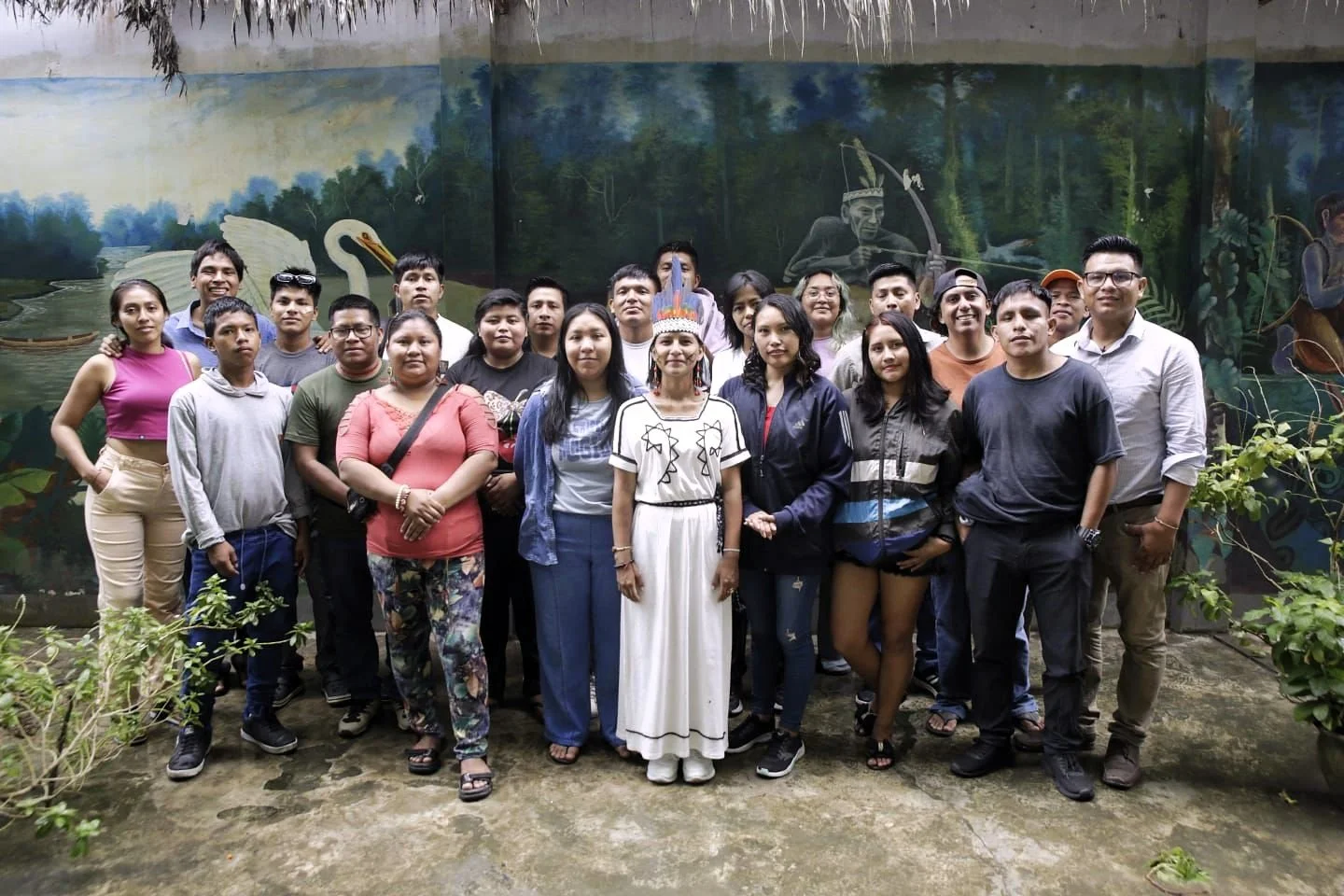
Tsɨuni’s collective, Nauta, 2025
“Tsɨuni,” in the Kukama language, means “to listen.” It is a word that evokes a simple gesture, yet one capable of becoming radical and transformative. In northeastern Peru, between the cities of Nauta and Iquitos, a collective has chosen this name precisely to affirm a practice: listening as a political act.
For Tsɨuni, listening today means making space for a suppressed truth: the brutality of the rubber era, still largely excluded from Peru’s official narrative and ignored globally. Restoring a voice to what has been silenced is the first step toward building justice in the present.
In this regard, on October 13, 2025, at the Mixed Court of Nauta, Tsɨuni initiated legal action against the Peruvian State, filing a formal request for the establishment of a Truth Commission to investigate the crimes committed during the rubber era in the Peruvian Amazon. It is an unprecedented initiative in the country.
“Thousands of Indigenous lives were shattered by an economy based on plunder and violence, driven by extractive interests and enabled by the silence of the State”, explains Omar Navarro, one of the members of the collective.
Today, more than a century later, the grandchildren of the survivors are demanding recognition of their right to truth:
“If we don’t do it, no one will”
Between the mid-19th century and the early 20th century, vast areas of the Amazon across Peru, Colombia, and Brazil were subjected to intensive exploitation for rubber (caucho) production, with devastating consequences: the enslavement and extermination of numerous Indigenous peoples, along with the destruction of entire forest ecosystems.
What happened is closely linked to the expansion of capitalism in the West. Rubber, a substance obtained from the latex found in the trunks of certain tree species (Hevea and Castilla), began to be demanded on a large scale in Europe and the United States—first with the popularization of bicycles, and later with the emerging automobile industry. Its use in tires turned it into a raw material of global strategic importance. From 1890 onward, the Peruvian city of Iquitos began to stand out as a hub for the commercialization of rubber from across the region, quickly monopolizing this trade.
“Many historians and rubber barons have been heard describing the rubber era as a glorious period, but no space has been given to the perspective of Indigenous peoples, nor have the victims been heard—something that would be ensured by the establishment of a Truth Commission”, declares activist Pedro Alca.
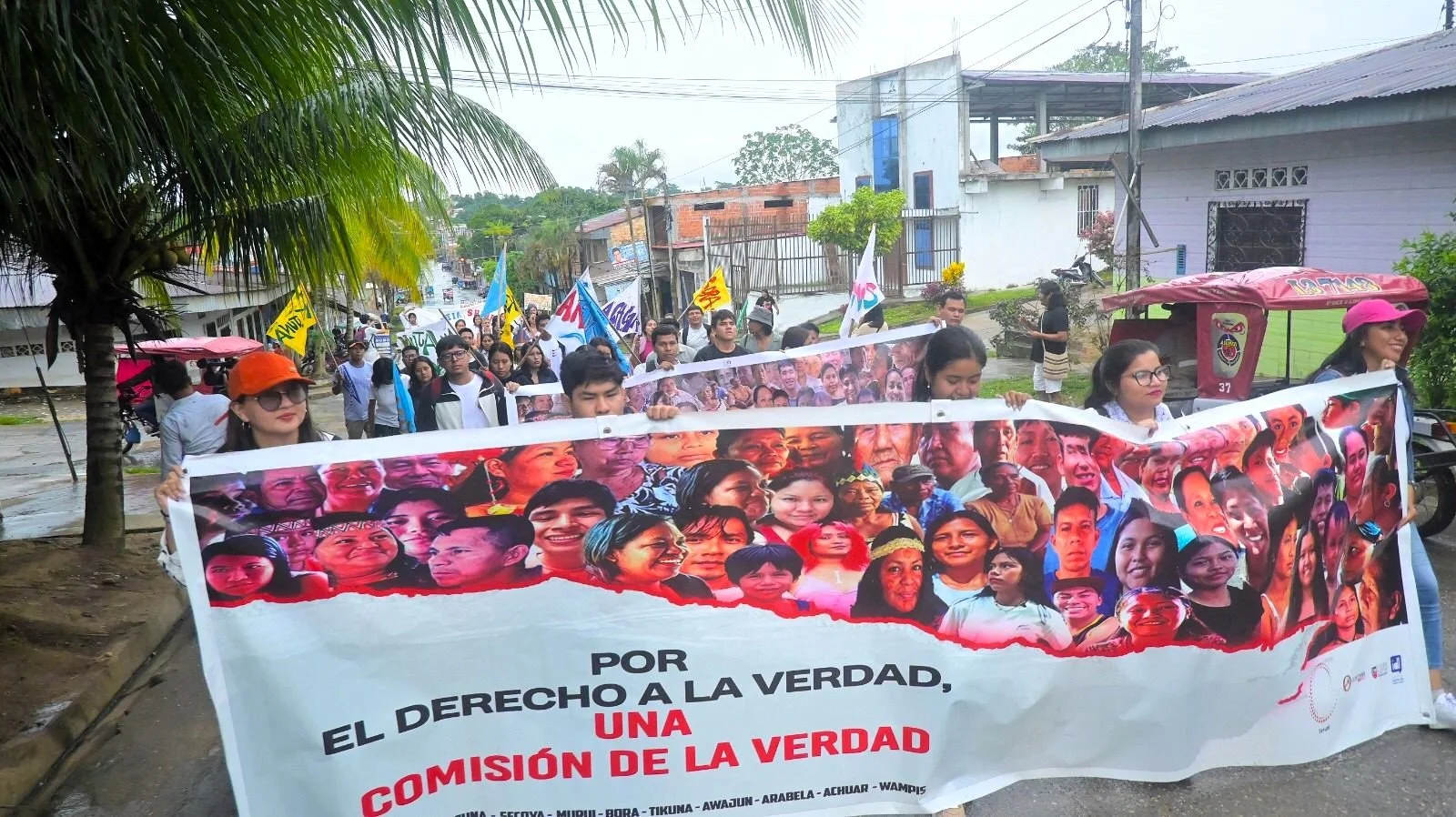
Marcia del 13 ottobre 2025 in occasione della presentazione dell’istanza; Nauta, 2025, foto del collettivo
To subject Indigenous people to labor, rubber barons resorted to the most atrocious methods (torture, rape, mutilation, and brutal forms of killing). There are no precise estimates, but it is believed that within a few decades between 30,000 and 100,000 Indigenous people were killed. This was not only a cruel system justified by a racist and colonial worldview, but also a deliberate strategy to maintain control through a mechanism of terror. Crimes and abuses only ceased when international interest in Amazonian rubber declined and the market ultimately collapsed in 1914.
All the crimes committed during the rubber era were later dismissed as excesses attributed to the actions of a few individuals or as manipulated and falsified data. Those responsible were never punished. Pain, trauma, and ongoing threats led Indigenous peoples to remain silent about what had happened.
Today, new generations no longer want to remain silent and are fighting to reclaim this memory.
For the young members of the collective, this remains an open wound: “Even today, there is a sense of helplessness. In Peru, there is a total concealment by the State of what happened. People speak of an economic apex for the Amazon, but the city of Iquitos is soaked in the blood and death of our ancestors. One cannot speak of development if it is based on a genocide in which entire peoples disappeared, others were forced to flee, and many were murdered”.
Rubber profoundly reshaped the social structures and ways of life of Indigenous peoples, who, at the end of this period, found themselves on the brink of cultural extinction. Ancestral territories were fragmented according to a strategy aimed at maximizing exploitation. This involved covering the largest possible area of forest while simultaneously weakening the internal social structures of Indigenous groups to prevent uprisings. Their dispersion and subsequent reorganization into communities left parts of the Amazonian territory in the hands of state power.
However, the lands of Indigenous peoples are spaces that transcend the borders defining modern nation-states. In various regions, Indigenous peoples today are seeking to restore their unity and territorial integrity through the creation of autonomous territorial governments, Indigenous nations, or forms of Indigenous autonomy. The ability to exercise self-governance would help protect their territories from the pressures of a State that safeguards extractive industries and illegal economies.
Indigenous peoples in Peru continue to face forms of extractivism
The Tsɨuni Collective emerged from a critical observation of the current political situation: “For many years, we have witnessed brutal and aggressive extractivism promoted by the State. History and violence repeat themselves. From the rubber era to today, the State continues to take our land, exploit our resources, and fail to guarantee the protection of our rights”.
Over the past twenty years, attacks against Indigenous peoples have not only continued but have multiplied and intensified. There is an ongoing violation of their right to be consulted—prior to and with full information—on any political or legislative measures the State wishes to adopt in their territories (as established by Convention 169 of the International Labour Organization and by the United Nations Declaration on the Rights of Indigenous Peoples, both ratified by Peru). Government concessions to extractive companies have led to increased deforestation, soil degradation, and water contamination, putting Indigenous lives at risk.
Contracts for the exploration or exploitation of hydrocarbons in the Amazon often overlap with the territories of most Indigenous communities and populations in voluntary isolation. The colonial and racist framework of the State denies these populations the ability to respond autonomously to the attacks they suffer. In defending their territorial rights, environmental defenders face violence, criminalization, and death. According to data from the Interethnic Association for the Development of the Peruvian Rainforest (AIDESEP), between 2010 and 2024, 35 Indigenous defenders were murdered and 226 were at risk of being killed.
The ways in which state power and parts of civil society justify this process of aggression show strong continuity with the narratives historically used to legitimize abuses against Indigenous peoples. The imaginaries constructed in the past do not disappear; rather, they transform and adapt to new political and economic interests in the form of new paradigms. Within this framework, the State can present itself as a “savior,” claiming to act to reduce poverty among Indigenous populations.
As noted in the book “Imaginario e imágenes de la época del caucho: Los sucesos del Putumayo” (Chirif, Cornejo Chaparro, 2009): “The need to modernize Indigenous populations thus becomes a justification for the elimination of their collective rights to territory, identity, language, and the ability to determine their own destiny as a people”.
Narratives about Indigenous Peoples and Colonial Responsibility
In the past, domination and exploitation were legitimized through the stereotypical portrayal of Indigenous peoples as savage, primitive, and inferior—a Western ideological construction. Alongside the creation of this image, the dominant society crafted the figure of the civilizer, whose purpose was to frame its actions in a moral dimension. The goal of this psychological and mediatic exercise of power was to make the control exerted over Indigenous lands and lives appear not as an act of self-interest, but as a work of salvation.
This compels reflection. Confronting our colonial past means taking responsibility in the present. Erasing or minimizing what happened—and what continues to happen—prevents full recognition of the wounds inflicted on colonized territories. The consequences manifest in policies, narratives, language, and power relations. The lack of condemnation and the absence of critical deconstruction and reckoning with colonialism continue to reproduce supremacism, extractivism, and the appropriation of Indigenous culture.
In terms of contemporary imaginaries, Indigenous peoples are often represented today as “guardians of the Amazon.” They are thus tasked with addressing major ecological issues of the present to help the West solve problems it itself created. To do so, however, they are expected to maintain a kind of “integrity,” remaining anchored in ancestral traditions. The colonial roots of these imaginaries are the same, resulting in a new form of subjugation. Communities are thus romanticized and exoticized, producing a homogenized image that flattens their diversity, cosmovision, and unique relationship with the land.
Indigenous Peoples’ Activism and Memory
Indigenous activism represents a collective, grassroots response to these dynamics. Indigenous activists embody counter-power, asserting their legitimacy and capacity for action through multiple forms of struggle.
Through networks of solidarity and tools such as social media, art, film, photography, and music, new generations claim the right to tell their own vision, refusing to remain merely objects of someone else’s narrative.
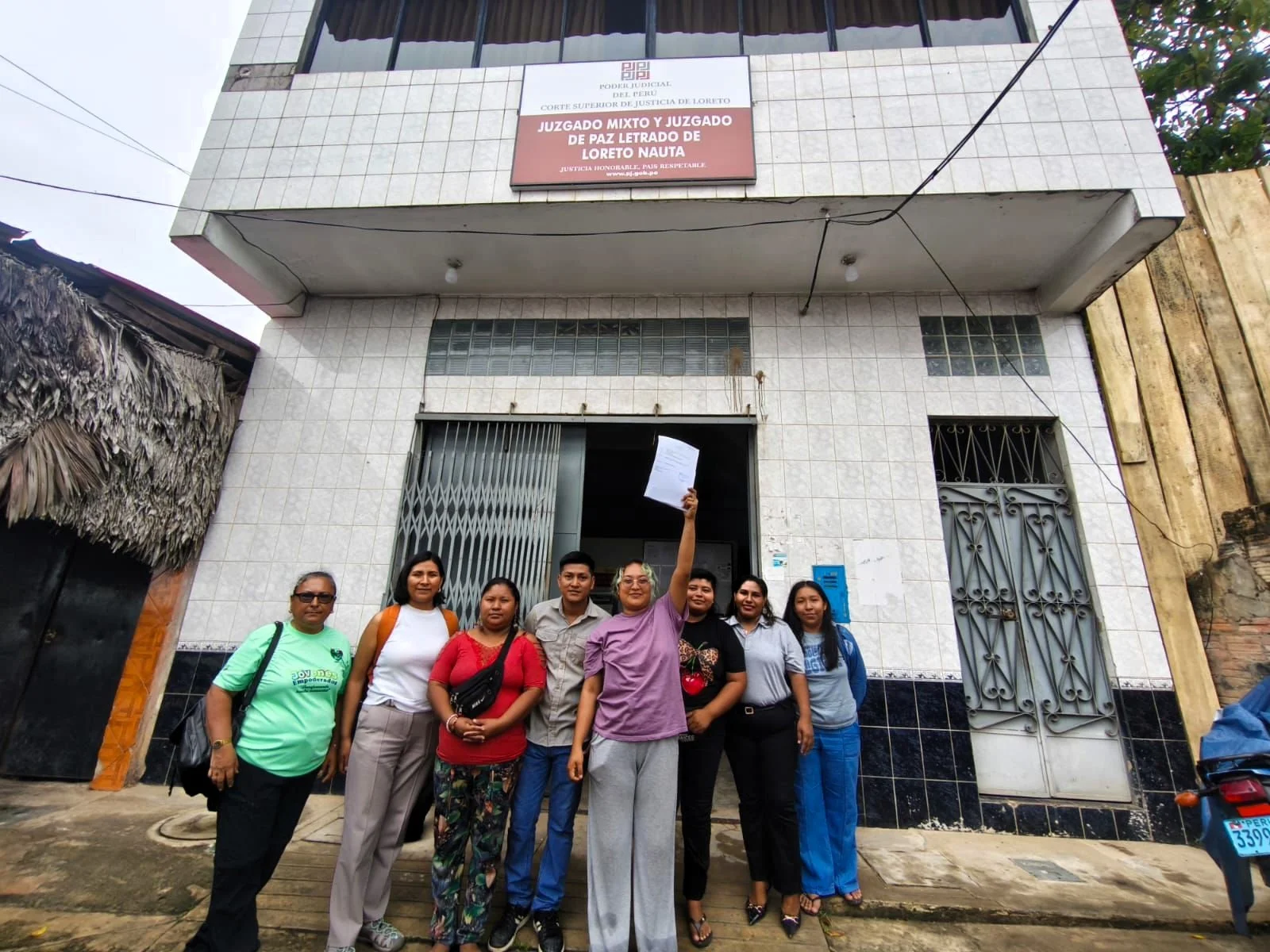
Presentazione dell’istanza al Tribunale Misto di Nauta; Nauta, 2025, foto del collettivo
Promoting spaces for counter-narratives is crucial for maintaining a vibrant, multifaceted, and enduring collective memory. In this regard, Tsɨuni positions itself as a movement that challenges the naturalization of dominant representations.
The activists in the collective, aged between 18 and 30, belong to 11 Indigenous peoples (Kukama, Murui, Maijuna, Secoya, Wampis, Awajún, Bora, Ticuna, Achuar, Arabela, and Shiwilu). Through outreach on social media, participation in national and international events, and the collection of testimonies about the rubber era, they are committed to bringing their history to light and making it heard.
The activists’ demands intersect with processes of identity rediscovery and self-formation, the processing of inherited trauma, and the reclamation of their spaces—serving as a bridge between past and future. Their lives are acts of resistance against a system that rejects, excludes, and disregards them.
As a matter of fact, those who hold power define, through processes of visibility and invisibility, who can determine what constitutes legitimate memory within society. In this compression of memory and subjectivity, forms of violence are continuously reproduced.
Repairing the colonial past therefore also means redefining public memory and giving space to silenced narratives. Remembering and acknowledging are necessary practices to prevent the perpetuation, in new forms, of the same colonial logics.
The struggle of Tsɨuni arises from the land and from pain, from the need to restore justice to their ancestors and to all forms of existence shattered by colonialist practices, which reduced life to mere survival:
“Memory is not a matter of the past. We want to confront the truth and give it a voice, thus giving a voice to Indigenous peoples and our ancestors”.
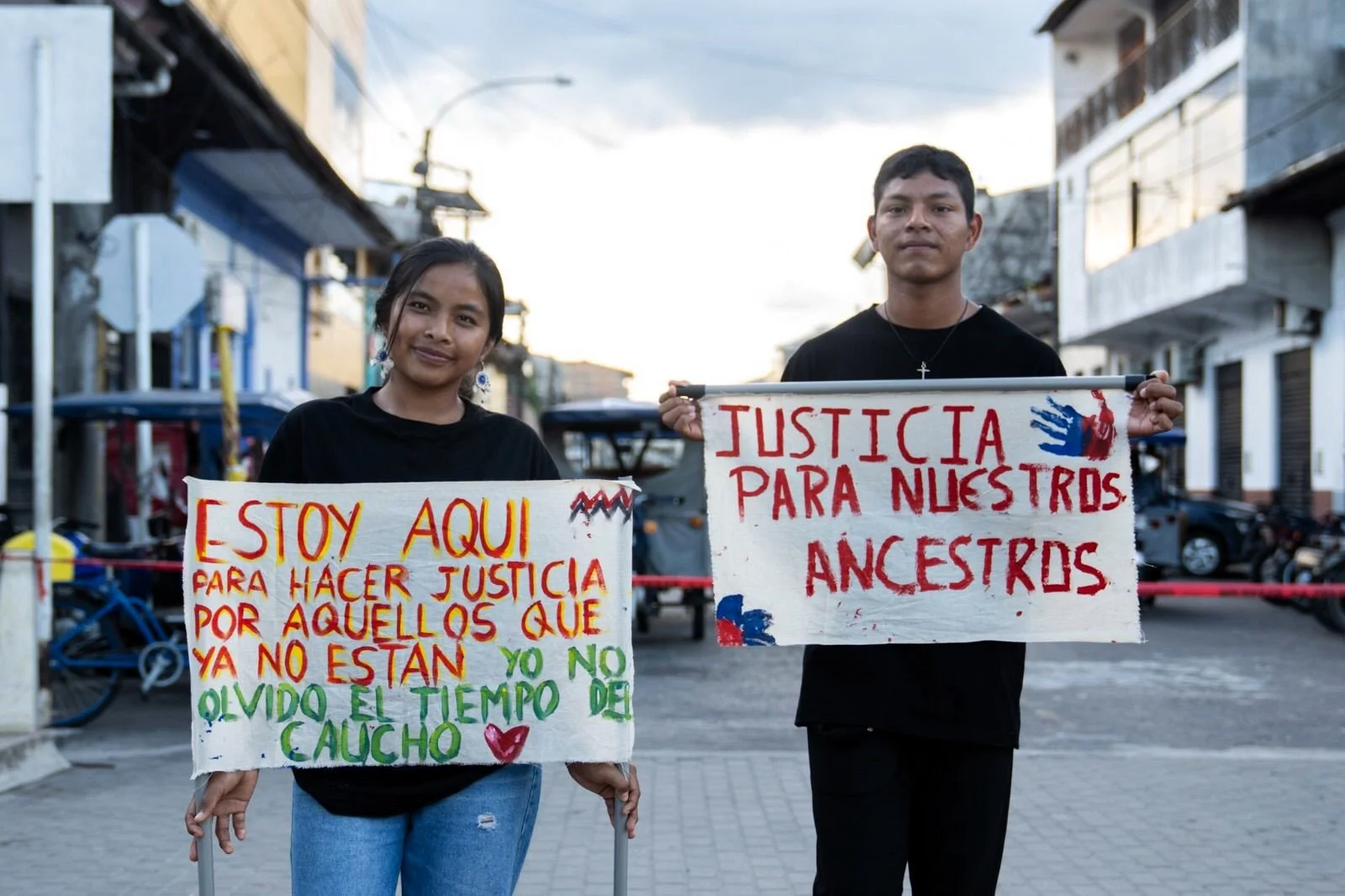
Momento della marcia del 13 ottobre 2025; Nauta, 2025, foto del collettivo
Thanks to the Tsɨuni Collective, and especially to Omar Navarro, Katy Ordoñez, Pedro Alca, Francia Diaz, and Maruja Gormaz, for taking the time to speak with me.
