
The aggression against Iran and the grammar of imperial domination
by Youssef Siher
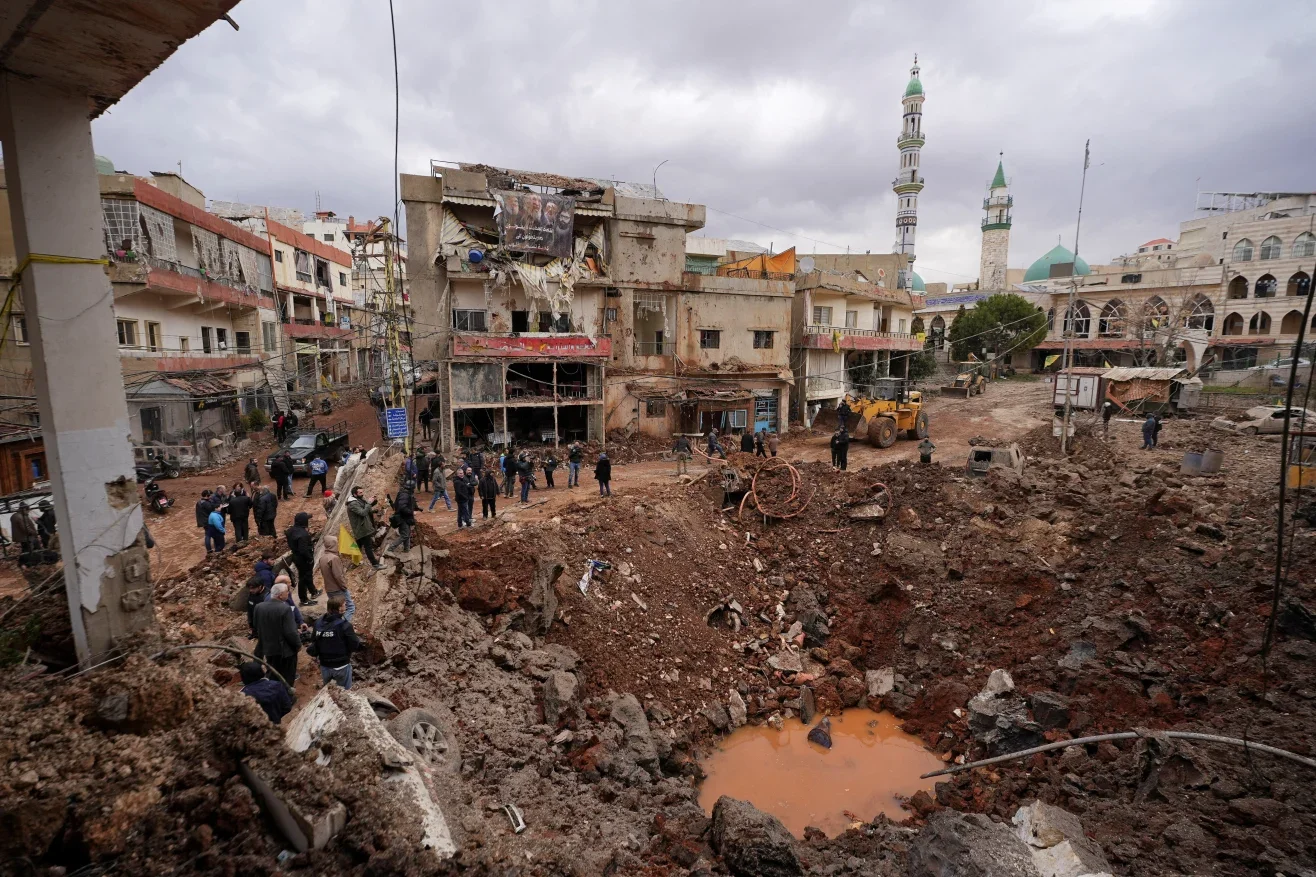
Mohammad Yassine/Reuters
The debate on the “liberation” of Iran continues to be based, today more than ever, on a basic falsehood: that oppression can be dismantled by the very structure that produces it. It is a lie that is repeated with almost mechanical regularity, and which the Zionist-US military aggression launched on February 28 has made evident once again — with all the enthusiastic statements from those who still call themselves “anti-imperialists” while viewing the political effects (regardless of their nature) of the bombings positively.
It is worth pausing to consider this figure: the fake anti-imperialist. They can be recognized by a simple diagnostic test. When the US declares war, they tend to find a technical reason to argue that “this time it's different.” When the Zionist entity bombs, they worry about the “complexity of the situation”.
When sanctions strangle a society, they regret it in the abstract but then conclude that perhaps there is “some truth” in the accusations. Armchair anti-imperialism survives only as long as imperialism does not change its clothes. All it takes is for it to don the rhetoric of “democracy,” “human rights” — or better yet, “women’s rights”, a topic that produces a Pavlovian thrill in certain white “progressive” circles — and the supposed anti-imperialist suddenly becomes willing, understanding, even enthusiastic.
In practice, these people do not oppose imperialism: they manage its image. They are ideological vassals, and often aware of it.
The operation against Iran has been presented as “preventive” — a word that serves to mask what is, in essence, an act of imperial discipline. The sequence is always the same: a country is economically strangled, diplomatically isolated, portrayed as a permanent threat, then militarily intervened upon with the declared aim of restoring order and freedom. This is not a contradiction: it is the method. And those who follow it step by step, giving their intellectual blessing each time, are not critical analysts: they are functionaries.
Imperialism as the primary contradiction
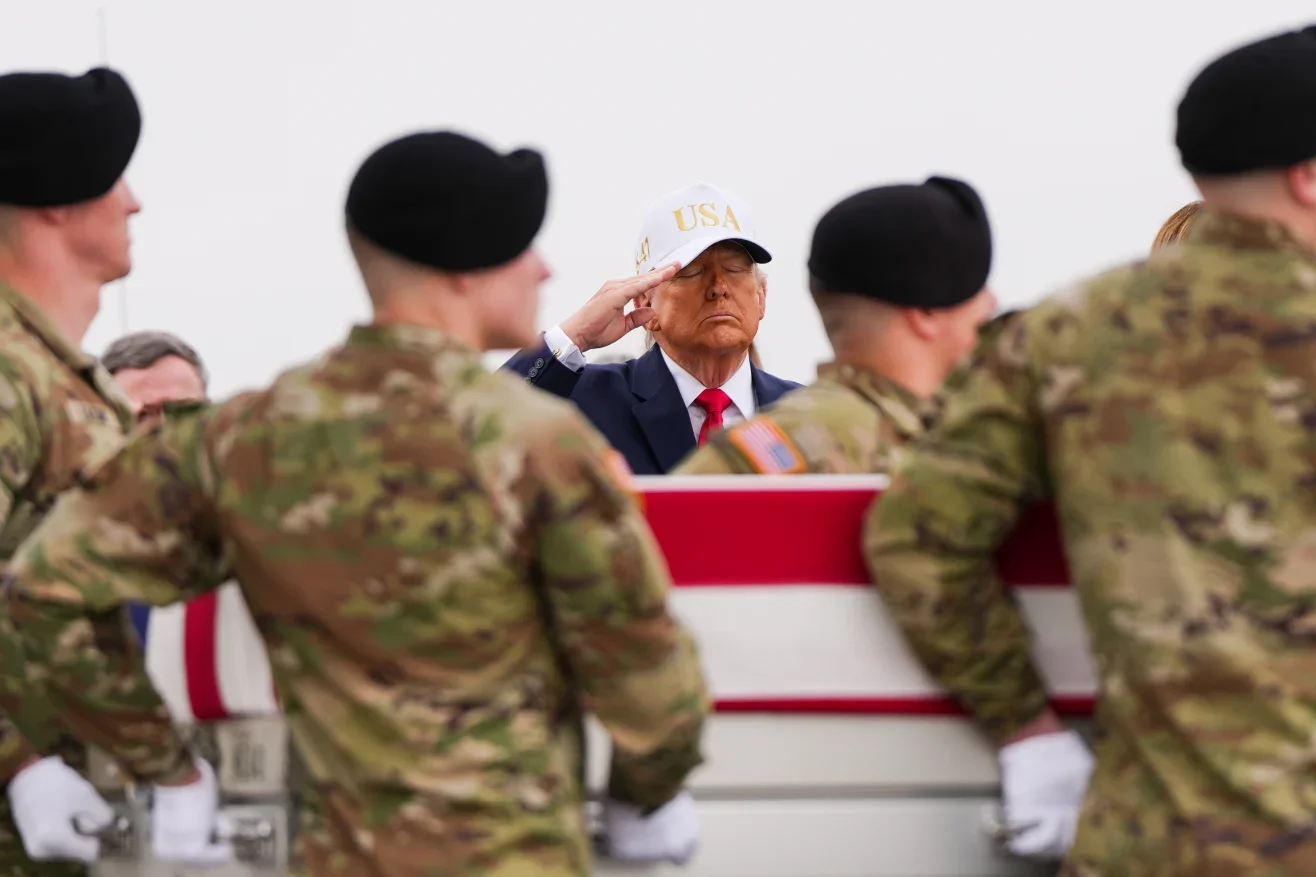
Julia Demaree Nikhinson/AP
Imperialism is not a backdrop, it is the primary contradiction. Everything else stems from it. For almost half a century, the United States has imposed a regime of economic and financial pressure on Iran that does not aim to change policies, but to shape a society. Sanctions do not abstractly affect a state: they penetrate daily life, redefining what it is possible to eat, treat, build, imagine. They produce scarcity and permanent insecurity, and a society living in a state of constant emergency does not have the historical time to transform itself politically.
The siege is not only economic: it is psychological, social, cultural. It reduces the horizon of possibility to survival.
When that compression produces political rigidity, the very actors who caused it point to it as proof of the unreformable nature of the Iranian system. It is updated colonial logic: create a crisis, then blame it on the victim, and finally call for intervention to “resolve” it. In this perspective, war becomes the final phase of a strategy that begins long before the bombing. The recent attack is no exception: it is the explicit manifestation of a process that has been going on for decades.
The region knows this script well. Iraq was one of the most brutal examples. First, the embargo that emptied society, then the invasion that destroyed the state, and finally the promise of democracy that resulted in fragmentation, internal war, and chronic dependence. Imperialism does not export free institutions; it exports imbalances that make it indispensable. Where it intervenes, it does not build autonomy: it builds the need for protection, vassals for its own hegemony.
The Gaza model: imperialism without metaphors

An Israeli helicopter fires while flying along the border between northern Israel and southern Lebanon on Wednesday.
Jalaa Marey/AFP/Getty Images
Within this architecture, the Zionist entity functions as a regional bulwark of an order based on military superiority and economic subordination.
It is not only an ally of Western imperialism: it is a strategic pivot, an instrument for projecting power and a laboratory for control techniques that are then exported — physically, in the form of contracts with police forces and armies around the world.
The management of the Gaza Strip paradigmatically demonstrates imperial logic: prolonged siege, control of vital resources, transformation of civilian life into an instrument of political pressure. Here, imperialism does not hide behind diplomatic formulas: it rules through deprivation. This is not an anomaly but a model — a demonstration of how collective punishment can be permanently integrated into geopolitical management, presented to the world as a “proportionate response” or “security necessity”.
But it is in the Palestinian question that another fundamental lesson emerges, one that fake anti-imperialists systematically ignore: that of national unity as a precondition for liberation, and of collaboration as structural betrayal.
The Palestinian people—geographically fragmented, militarily besieged, deprived of all formal sovereignty—have faced the problem of how to build resistance from within for decades. Divisions between factions, ideological disputes, organizational rivalries: all of this is a legitimate part of the political life of a people fighting for their existence. These contradictions are resolved internally, in the confrontation between forces that, despite their sometimes profound differences, share the horizon of liberation.
This is the principle: internal conflicts are managed within the field of resistance, because unity is not a luxury, it is the material condition without which the struggle is impossible.
The threshold beyond which this principle breaks down is precise and recognizable: when a faction ceases to be a component of the national camp — even an uncomfortable one, even a rival one — and becomes an active instrument of imperial interests against its own people. This is exactly what the Palestinian National Authority represents. Security coordination with the Zionist occupation forces is collaborationism. It is not a difficult tactical choice: it is a service rendered to the occupier against one's own compatriots. The PNA does not manage the resistance differently from other factions: it actively prevents its exercise, hands over militants, and protects the occupation from what should be its main internal threat.
Fatah and the PLO have traveled a long and well-documented path: from armed struggle to “diplomacy,” from diplomacy to administrative management, from administrative management to operational subordination to the interests of the US and the Zionist entity. Each step has been presented as ‘pragmatism’ or “political realism.” The result is an entity that occupies the symbolic territory of Palestinian representation while emptying it of its real content. To speak of “internal division” between the PNA and Hamas as if it were a dispute between equals, between two factions of the same camp, is intellectually dishonest: it is equivalent to describing the relationship between an occupying force and those who oppose it as a “political conflict”.
Those who fear independent societies
Isolating the issue of Iranian “authoritarianism” from the system of pressure surrounding it is not analysis: it is ideology. Not because internal contradictions do not exist, but because they are presented as self-sufficient phenomena. No society subjected to embargoes, military threats, ideological terrorism, and permanent destabilization can develop healthy and autonomous political processes. The siege restricts the space for dissent, concentrates power in the security apparatus, and transforms politics into continuous defense. Imperialism produces exactly the conditions that it then denounces as proof of the backwardness of the target country.
It is a self-referential system: it creates the disease and sells the cure, which is always the same—more imperialism.
The reality is simpler and harsher: the imperial system does not fear authoritarian governments, it fears independent societies. It can coexist with any regime as long as it is subordinate — and the list of dictatorships that Washington has supported, armed, and protected is long and well documented. It reacts with hostility only to any state that attempts to escape its economic and military hierarchy. Saudi Arabia and Egypt are not on the list of ‘bad guys’ despite everything that is known about their internal workings. Iran is — not because it is more repressive, but because it has not bowed down. In this context, the word “liberation” becomes an ideological device: it serves to transform intervention into mission, coercion into responsibility, war into political pedagogy.
Turning the problem on its head
For this reason, if we want to talk seriously about emancipation — in Iran, in Palestine, anywhere in the global South that suffers from this order — we need to turn the problem on its head. We should not ask which government should fall, but which system of domination should end. We should not ask which Palestinian faction is “more moderate,” but which forces are working for liberation and which for occupation. We should not ask whether this or that leader is democratic enough to deserve Western support, but understand that the “Western” assessment is itself part of the problem.
As long as sanctions, military bases, coercive alliances, local collaborationism, and direct aggression continue to structure the region, any talk of freedom will remain without material foundation. People cannot transform their institutions while defending their survival. They cannot build autonomy while someone else decides whether they will have access to bread, energy, or medicine—and while part of their own diaspora acts as a transmission belt for that other party.
The first liberation is not from a government, but from the imperial structure that determines who can breathe and who must bow down. Only when this structure begins to crack will internal contradictions become fertile ground for real transformation. Until then, the word “liberation” will continue to circulate as a slogan of power — uttered with a firm voice by those who call themselves anti-imperialists and sign every surrender with their hand on their heart.
